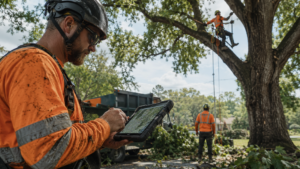
Trees Are Tough. Arborist IT Systems Should Be Tougher.

IT News for Arborists Near Me

Trees survive wind, heavy rain, lightning, drought, insects, disease, and years of changing weather. Arborists work in many of the same conditions. Their equipment is built for rough terrain, their crews are trained to manage dangerous situations, and their vehicles carry tools capable of handling enormous limbs and damaged trunks. Yet behind many arborist companies sits a surprisingly fragile collection of computers, phones, passwords, spreadsheets, and disconnected software.

That weakness may remain hidden during an ordinary week. The schedule is manageable, calls arrive at a steady pace, and employees can work around the occasional technical problem. Everything changes when a storm rolls through the area. Phones begin ringing, online requests pile up, crews need updated addresses, and customers expect immediate answers. A slow computer, lost password, failed internet connection, or inaccessible customer database can suddenly become as disruptive as a broken chipper.

Information technology includes the systems used to create, store, retrieve, process, and transmit information. For an arborist company, that information includes customer records, estimates, property photos, job notes, crew assignments, invoices, maps, equipment records, and emergency requests. According to IBM’s overview of IT infrastructure, dependable business technology relies on connected hardware, software, storage, and networking components. Those pieces should work together as one durable operating system for the company rather than a pile of unrelated tools.

Arborist Work Has Become Digital Work 🌳

Tree care remains physical, skilled, and highly specialized, but the business surrounding it has moved online. A customer may discover a company through search results, read reviews, submit a website form, upload pictures of a damaged tree, receive an estimate by email, sign an agreement electronically, and pay an invoice from a phone. Before a crew ever starts a chainsaw, several digital systems have already influenced whether the job was won or lost.

This matters because customers rarely separate a company’s technical performance from its overall professionalism. A homeowner who submits a request and receives no response does not know that a notification failed. The customer only knows that the company appeared unavailable. A property manager who receives an estimate with missing information does not see a software synchronization problem. The manager sees an incomplete proposal.

Reliable IT helps arborist companies maintain a consistent experience from the first contact through the final payment. Calls, forms, text messages, estimates, contracts, photographs, and invoices should remain connected to the same customer record. Office staff should be able to see what the estimator promised. Crew leaders should be able to access the correct address, work order, site notes, and safety concerns. Owners should be able to review job status without calling five people to reconstruct the day.

A strong digital system does more than save time. It reduces the small communication failures that slowly damage customer trust.

Storm Response Depends on More Than Trucks and Chainsaws ⛈️

Storm work can create one of the greatest opportunities for an arborist company, but it can also expose every weakness in the business. A company may receive several days’ worth of calls in a few hours. Emergency requests must be sorted by severity, location, access, utility involvement, crew capacity, and potential danger.

A notebook beside the phone may work for ten calls. It becomes unreliable when dozens of people are reporting fallen trees, blocked driveways, damaged roofs, and hanging limbs. Handwritten information can be misread, duplicated, or lost. Text messages may reach one employee while the rest of the team remains unaware of the request.

A durable IT system creates a central record for each incoming job. Office staff can document the address, callback number, damage description, photographs, access limitations, and urgency. Dispatchers can assign work based on location and crew availability. Field employees can update the job from a phone or tablet, allowing the office to provide accurate information when a customer calls again.

Digital reliability becomes especially important when power or internet service is unstable. Cloud-based tools, mobile access, backup connections, charged battery packs, and documented emergency procedures can help the company continue operating. The goal is not to create a complicated technology department. The goal is to prevent one failed device or lost connection from shutting down the entire response effort.

Cybersecurity Protects More Than Customer Data 🔐

Arborist companies may assume cybercriminals are mainly interested in banks, hospitals, and large corporations. Small businesses are still attractive targets because they often store valuable information without maintaining the same security resources as larger organizations.

An arborist company may keep customer names, addresses, phone numbers, email addresses, property photographs, signed contracts, payment records, employee files, insurance documents, and vendor information. Access to the company email account can also expose invoices, password-reset messages, customer conversations, and payment instructions.

The NIST Cybersecurity Framework 2.0 provides organizations with guidance for managing cybersecurity risk through governance, identification, protection, detection, response, and recovery. The framework is designed to support organizations of different sizes and levels of technical sophistication, making its underlying principles relevant to small service companies as well as major institutions.

For an arborist business, practical protection begins with disciplined habits. Employees should use unique passwords, multifactor authentication, updated software, secure Wi-Fi, protected mobile devices, and controlled access to business accounts. Former employees should lose access promptly. Sensitive information should not live indefinitely in personal text messages or on an estimator’s unprotected laptop.

The Cybersecurity and Infrastructure Security Agency’s small-business resources include guidance for developing incident-response plans, protecting against ransomware, and improving basic cyber readiness. A written response plan gives the company a clear path when an account is compromised, a device disappears, or suspicious activity appears.

Lost Data Can Become Lost Revenue 💾

A computer failure becomes expensive when the only copy of important information was stored on that computer. Estimates, customer lists, photographs, bookkeeping records, job histories, and employee documents may represent years of work. Rebuilding that information can take weeks, and some of it may never be recovered.

Backups should be automatic, secure, and tested. Saving files to an external drive is useful only when the drive remains connected, current, protected, and functional. Cloud storage can add flexibility, but it must be configured properly and protected with strong access controls. Important systems may require more than one backup method so that a single failure does not destroy both the original information and its backup.

The Federal Trade Commission’s cybersecurity guidance for small businesses emphasizes protecting networks, information, and business operations from common online threats. The FTC also warns that small companies can lose time, money, and information when cybersecurity is neglected.

Backups also support ordinary business needs. An estimator who accidentally deletes a proposal should be able to recover it. A damaged phone should not erase customer photographs. A bookkeeping error should not require the company to recreate months of records. Recovery should be a planned process rather than a desperate search through old emails and employee devices.

Reliable Systems Keep Crews Moving 📱

Field employees should not need to return to the office for information that could be securely accessed from a mobile device. The right field system can provide addresses, maps, work orders, equipment requirements, customer notes, photographs, completion forms, and schedule changes.

This does not mean every arborist needs a complicated screen filled with dozens of features. Field technology should be simple enough to use while wearing gloves, standing near noisy equipment, or working in poor weather. Too many menus, slow loading times, and unnecessary data entry can turn useful software into another obstacle.

The strongest systems match the company’s actual workflow. A small residential tree-care company may need scheduling, estimating, invoicing, and customer communication. A larger operation serving municipalities or commercial properties may also need asset tracking, recurring maintenance schedules, detailed inspection records, crew certifications, and job-cost reporting.

Reliability should remain a priority when software is selected. The AWS Well-Architected Framework’s reliability guidance describes reliability as the ability of a workload to perform its intended function correctly and consistently when expected. That principle applies beyond large cloud environments. An arborist company’s technology should perform during busy weeks, severe weather, employee absences, and equipment failures, not only when conditions are convenient.

Better IT Supports Local Visibility and Faster Follow-Up 📍

A reliable internal system strengthens external marketing. Local search visibility may bring a steady stream of visitors to the website, but those visitors still need a clear way to request service. A properly connected website can send inquiries directly into a customer-management system, create follow-up reminders, and alert the appropriate employee.

Someone searching for Arborists Near Me is usually looking for a nearby professional who appears credible, responsive, and prepared to handle the work. The company’s website, contact forms, reviews, phone system, email, and scheduling process all shape that impression.

Fast follow-up matters because customers often contact several companies, especially when a tree is damaged or creating a safety concern. Automated confirmation can immediately let the customer know that the request was received. Internal notifications can make sure the inquiry reaches the right employee. Follow-up tracking can prevent a strong lead from disappearing because someone assumed another person had returned the call.

Technology should support personal service rather than replace it. Customers still value knowledgeable conversations, clear explanations, accurate estimates, and dependable crews. Good IT removes the administrative confusion that prevents employees from delivering that service consistently.

Business Continuity Requires Preparation 🛡️

A durable arborist business should be able to continue operating when a laptop fails, an employee leaves, an email account is compromised, or an important application becomes unavailable. That requires documented procedures and shared access controlled by the company.

Critical systems should not depend entirely on one employee’s memory. Account ownership, billing details, administrator access, software subscriptions, backup procedures, vendor contacts, and recovery instructions should be documented securely. The owner should know which systems are essential and how long the business can function without each one.

Microsoft’s guidance on breach prevention and recovery infrastructure connects security planning with business continuity and disaster recovery. It recommends protecting identity systems, maintaining recovery capabilities, and modernizing vulnerable infrastructure.

Regular testing is equally important. A backup that has never been restored remains an assumption. An emergency contact list that has not been updated may be useless. A former employee’s active account may become a security gap. Reviewing these systems a few times each year can reveal problems before they interrupt customer service or field operations.

Tough IT Creates Room for Growth 📈

Arborist companies often add technology one piece at a time. Someone creates a spreadsheet for leads. Another employee chooses a scheduling app. Estimates are stored in email. Photos remain on personal phones. Accounting software contains one version of the customer’s information while the office calendar contains another.

This may work while the company is small, but growth makes the cracks wider. More crews create more scheduling conflicts. More customers create more follow-up tasks. More employees create more passwords and access points. More equipment creates more maintenance records. Without connected systems, the owner spends increasing amounts of time searching for information and correcting preventable mistakes.

Strong IT provides a reliable foundation for expansion. New employees can follow documented processes. Managers can see accurate job information. Owners can review performance without manually combining several reports. Customers receive more consistent communication. The company becomes less dependent on improvisation and individual memory.

Technology should be selected according to business needs rather than trends. The most expensive software is not automatically the best choice, and the newest platform may not fit the company’s workflow. A useful system should reduce duplicate work, improve visibility, protect information, and remain manageable for the people who use it every day.

Conclusion

Trees are built to withstand difficult conditions. Successful arborist companies must develop the same resilience behind the scenes.

Strong trucks, sharp saws, skilled climbers, and trained ground crews remain essential. Reliable IT systems now belong in that same category. Scheduling, dispatch, customer communication, cybersecurity, backups, estimating, invoicing, and mobile access all contribute to the company’s ability to respond quickly and operate professionally.

A tough IT system does not need to be oversized or complicated. It needs to be secure, connected, documented, backed up, and designed around the way the company actually works. When technology remains dependable during storm season, employee changes, equipment failures, and busy periods, the entire organization becomes stronger.

The trees may be tough. The systems supporting the arborists responsible for them should be tougher. 🌲

Why Chemical Manufacturing Companies in Houston Can’t Afford to Operate Without IT

Chemical Manufacturing Companies in Houston for IT News

Houston’s chemical manufacturing industry was built on physical assets: processing equipment, storage facilities, pipelines, laboratories, loading terminals, and an experienced workforce. Those assets remain essential, but they no longer operate independently of technology. Modern production depends on networks, software, sensors, automated controls, cloud platforms, cybersecurity systems, and real-time communication.

For Chemical Manufacturing Companies in Houston, information technology is not merely a department that repairs computers or resets passwords. IT has become part of the machinery that keeps production moving, protects sensitive information, supports regulatory documentation, and connects employees with the systems they need to make informed decisions.

A weak technology environment can now interrupt production just as quickly as a mechanical failure. When networks become unavailable, data is lost, or industrial systems are compromised, the consequences can spread across an entire facility. In a region where chemical production, transportation, energy, and international commerce are closely connected, reliable IT is a basic operational requirement.

Houston’s Industrial Economy Is Becoming More Digital

Houston has long been associated with energy, petrochemicals, shipping, engineering, and large-scale manufacturing. An overview of the Houston economy on Wikipedia reflects the enormous role that industrial businesses, chemical facilities, pipelines, refineries, and the Houston Ship Channel play in the region.

What has changed is the amount of technology now supporting those industries. Production schedules are maintained through digital platforms. Laboratory information is stored electronically. Inventory is monitored through connected systems. Plant managers review performance dashboards instead of waiting for handwritten reports. Vendors submit documents through online portals, while customers expect accurate shipment updates almost immediately.

Houston itself operates through an extensive technology infrastructure. The city’s official Houston Information Technology Services department supports digital services, networks, public systems, and technology used across city operations. That dependence on reliable technology is also present inside the private industrial facilities that power Houston’s economy.

The plant floor and the front office are no longer separate technology environments. Production, accounting, safety, purchasing, logistics, maintenance, and customer service increasingly share information. When the systems connecting those departments work properly, the company can operate efficiently. When they fail, the interruption can reach nearly every part of the business.

IT Keeps Production Systems Connected

Chemical plants use a wide range of operational technology, including process control systems, programmable logic controllers, monitoring equipment, alarms, sensors, and automated production machinery. These systems may have been installed at different times by different vendors, but they still need to communicate securely and consistently.

IT teams help manage the networks that connect these systems. They control access, monitor performance, maintain servers, update approved software, document device configurations, and identify communication problems before they become larger operational failures.

A minor network problem can produce major confusion. Operators may lose access to dashboards, maintenance teams may be unable to review equipment history, and managers may not receive accurate production information. Even when the physical equipment continues to run, the loss of visibility can make it difficult to operate safely or efficiently.

Proper IT planning reduces these risks by creating a structured environment. Critical equipment is documented, network traffic is monitored, backup systems are tested, and responsibilities are clearly assigned. Instead of reacting to disconnected systems during an emergency, the company has a coordinated plan for maintaining operations.

Cybersecurity Must Protect the Plant Floor 🔐

Chemical manufacturers hold valuable information, including formulas, production records, customer data, employee information, vendor contracts, pricing details, facility diagrams, and operational procedures. They may also operate systems that control physical equipment. This makes cybersecurity a business, safety, and continuity concern.

The threat is not limited to someone stealing office documents. A compromised account, infected laptop, unprotected remote connection, or outdated server can provide access to systems that affect production. Ransomware can lock employees out of essential files. Phishing emails can expose credentials. Poorly secured vendor access can create a path into the company network.

The University of Houston’s Center for Information Security Research and Education has highlighted cyber incidents involving infrastructure and energy-related networks, demonstrating how digital attacks can disrupt communication and operations beyond a traditional office setting.

Strong cybersecurity begins with separating critical industrial networks from ordinary business traffic. It also requires multifactor authentication, controlled remote access, endpoint protection, email security, employee training, reliable backups, and continuous monitoring.

Security cannot be treated as a one-time installation. Technology changes, employees change roles, vendors receive temporary access, and new vulnerabilities are discovered. Regular reviews help ensure that old accounts are removed, software is updated appropriately, and access remains limited to people who genuinely need it.

Downtime Is More Expensive Than an IT Plan

Chemical production facilities are designed to operate according to carefully managed schedules. Materials arrive at specific times, equipment must remain within operating limits, laboratory results influence production decisions, and finished products must be prepared for transportation.

An unexpected technology failure can interfere with that entire sequence. Employees may lose access to work orders, shipping information, batch records, inventory levels, or maintenance documentation. Production may slow while workers attempt to verify information manually. Customers may receive delayed updates, and management may have difficulty determining the extent of the problem.

The expense of downtime is not limited to lost production. A prolonged interruption may create overtime costs, delayed shipments, wasted materials, contract problems, and strained customer relationships. It can also force experienced employees to spend hours reconstructing records or completing administrative tasks by hand.

A dependable IT strategy costs far less than repeatedly recovering from preventable failures. Preventive maintenance, system monitoring, replacement schedules, tested backups, and documented recovery procedures give the company a much better chance of resolving an interruption before it becomes a shutdown.

Reliable Data Supports Better Maintenance Decisions

Maintenance departments once depended heavily on paper logs and individual knowledge. Those sources remain useful, but they can be incomplete, difficult to search, or unavailable when a particular employee is absent.

Digital maintenance systems make equipment history easier to review. Technicians can see previous repairs, recurring problems, inspection dates, replacement parts, and manufacturer recommendations. Sensors can also provide information about temperature, vibration, pressure, flow, and other operating conditions.

When this information is organized correctly, maintenance becomes more proactive. A developing equipment problem may be identified before a complete failure occurs. Parts can be ordered before an emergency, and maintenance can be scheduled during a planned production window.

Research reported by Rice University News has examined improved methods for processing complex data streams and supporting real-time analysis. That type of innovation reflects the broader movement toward faster, more useful information across industrial and technical environments.

IT provides the foundation that makes this data usable. Without reliable networks, secure storage, system integration, and accurate permissions, even advanced monitoring equipment can become another isolated source of information.

Technology Strengthens Documentation and Traceability

Chemical manufacturers must maintain detailed records. Depending on the operation, those records may involve raw materials, production batches, quality testing, equipment inspections, employee training, shipments, incidents, environmental procedures, and corrective actions.

Paper records can be misplaced, damaged, duplicated, or completed inconsistently. Disconnected spreadsheets create another problem because departments may maintain different versions of the same information. Employees can waste valuable time determining which document is current.

A well-managed digital system creates greater consistency. Documents can be stored in approved locations, changes can be tracked, permissions can be controlled, and retention policies can be applied. Authorized employees can locate the information they need without searching through filing cabinets or relying on someone else to send a copy.

Good IT does not replace responsible documentation practices. It makes those practices easier to follow. Employees need clear procedures, dependable systems, and training that reflects how the company actually operates.

Houston’s Weather Makes Business Continuity Essential

Houston facilities face environmental conditions that can affect power, communications, transportation, and employee access. Severe storms, flooding, hurricanes, extreme heat, and electrical interruptions can make an ordinary technology problem much more difficult to resolve.

A business continuity plan should identify the systems that must be restored first. Production control, safety communication, laboratory information, shipping records, payroll, vendor contacts, and customer communication may all have different recovery priorities.

Backups must also be protected from the same event that affects the primary systems. A backup stored on the same network may be unavailable during a cyberattack. A server located inside the facility may be inaccessible after a major storm. Secure off-site and cloud-based backup options can provide another layer of protection, but only when they are configured correctly and tested regularly.

The company should know how employees will communicate when normal systems are unavailable. Contact lists, escalation procedures, vendor information, and recovery responsibilities should be documented in advance. Business continuity works best when employees have practiced the plan before a real emergency occurs.

IT Connects the Supply Chain

Chemical manufacturing depends on an extensive network of suppliers, transportation providers, warehouses, laboratories, contractors, and customers. Each connection creates an exchange of information.

Purchasing teams need accurate inventory levels. Production managers need delivery schedules. Shipping departments need customer instructions and transportation documents. Accounting teams need approved purchase orders and invoices. Customers need dependable information about order status and delivery timing.

When systems are fragmented, employees enter the same information repeatedly. Repeated data entry increases the likelihood of mistakes, especially when production is busy or schedules change unexpectedly.

Integrated technology allows information to move more efficiently between departments. A change in inventory can inform purchasing. A completed batch can update shipping. A customer order can be connected to production planning. Managers can see developing delays before those delays become customer complaints.

The University of Houston’s CYBER-CARE initiative focuses on cybersecurity, transportation, supply chains, and the reliable movement of goods. Its work illustrates how closely digital security and physical logistics are now connected.

Employees Need Technology That Works With Them

Technology produces results only when employees can use it effectively. Complicated systems, inconsistent logins, slow equipment, and unclear procedures encourage workers to create shortcuts. Those shortcuts may include shared passwords, unapproved applications, personal storage accounts, or handwritten notes that never enter the company’s official system.

A strong IT department works with plant personnel rather than simply installing technology. Operators, maintenance technicians, laboratory employees, administrators, and managers should have systems that match their actual responsibilities.

Training is equally important. Employees should understand how to recognize suspicious emails, protect credentials, store documents, report technical problems, and use company-approved tools. Training should be practical and connected to real workplace situations.

Houston’s technology workforce continues to develop through local research, education, and business investment. The University of Houston’s cybersecurity news highlights programs and initiatives involving cybersecurity, infrastructure, transportation, connected technology, and workforce development.

Houston’s Technology Community Is Moving Forward

Chemical manufacturers do not operate outside Houston’s growing technology environment. They are part of it. Local companies are adopting automation, artificial intelligence, cloud platforms, connected devices, advanced analytics, and new cybersecurity practices.

InnovationMap regularly reports on Houston’s technology, energy, health, startup, and innovation communities. The Houston Business Journal technology section also tracks technology companies, cybersecurity providers, major investments, and business developments across the region. Together, these sources demonstrate that Houston’s industrial growth is increasingly connected to its technology capabilities.

Manufacturers that postpone technology improvements may find themselves competing against businesses with better production visibility, faster customer communication, stronger security, and more efficient operations. Modernization does not require replacing every system at once. It requires a realistic plan that identifies the greatest risks and addresses them in a logical order.

IT Must Be Treated as an Operational Partner

The most effective IT relationships are built around business operations. Technology professionals need to understand how the facility produces, stores, tests, and ships its products. Plant leaders need to understand which systems are critical and what could happen if those systems fail.

That partnership should include regular technology reviews, cybersecurity assessments, backup testing, network documentation, equipment replacement planning, vendor access controls, and employee training. IT should also be involved before new equipment or software is purchased. Early involvement helps prevent compatibility problems, weak security configurations, and unexpected support costs.

A chemical facility does not need technology for the sake of appearing modern. It needs technology that supports safe production, dependable communication, accurate records, faster recovery, and informed decision-making.

Conclusion

Chemical manufacturing in Houston is no longer powered by physical equipment alone. Production systems, business applications, digital records, communications, security tools, and industrial networks now work together as part of the same operating environment.

Reliable IT helps prevent avoidable downtime, protects sensitive information, supports documentation, improves maintenance, strengthens the supply chain, and prepares the company for emergencies. It gives employees dependable access to information and gives management a clearer view of what is happening across the organization.

The companies that treat IT as essential infrastructure will be better prepared for cyber threats, weather disruptions, equipment problems, customer demands, and future growth. Those that continue treating technology as an occasional support expense may discover that the most expensive IT decision was the decision to wait.

Why IT Consultants Should Read The Sinsworn Chronicles, Book II: The Forbidden Flame for Strategy, Leadership, and High-Stakes Problem Solving 🔥

IT News for epic fantasy novels

IT consultants spend their careers inside complex systems. They walk into organizations where leadership is strained, technology is tangled, teams are under pressure, and every decision has consequences. They are asked to solve problems that are rarely simple, rarely isolated, and rarely technical alone. That is why the best IT consultants do not only study software, cybersecurity, infrastructure, project management, or digital transformation. They also study leadership, decision-making, human behavior, risk, loyalty, and the pressure that comes when the wrong move can change everything.

That is one reason The Sinsworn Chronicles, Book II: The Forbidden Flame is more than entertainment for consultants, strategists, and technology leaders. Fantasy may seem far removed from cloud migrations, AI governance, cybersecurity planning, ERP rollouts, data strategy, and client advisory work, but strong fiction often reveals truths that business books only outline. A powerful story places characters under pressure, strips away easy answers, and forces readers to watch how people respond when the path forward is uncertain.

For IT consultants who want to sharpen their strategic thinking, leadership instincts, and high-stakes problem-solving ability, this book belongs beside professional development resources, technology trend reports, and leadership material. Readers who enjoy epic fantasy novels often recognize that the genre is built on the same core challenges consultants face every day: competing priorities, fragile alliances, hidden risks, difficult choices, and the need to lead people through uncertainty.

The Connection Between Fantasy Strategy and IT Consulting

At its core, IT consulting is about helping organizations move from confusion to clarity. According to Wikipedia’s overview of information technology consulting, IT consultants advise organizations on how to use technology to achieve business objectives. That definition sounds clean and straightforward, but anyone who has worked in consulting knows the reality is much messier. Business goals compete with budget limits. Security needs compete with convenience. Innovation competes with legacy systems. Leadership wants speed, but teams need stability.

Fantasy stories like The Forbidden Flame are built around similar tension. Characters are forced to make decisions without having every answer. They must read the room, understand threats, protect what matters, and choose a path even when the cost is high. That is exactly what IT consultants do when they help clients navigate a major technology shift.

A consultant may be asked whether a company should move to a new platform, rebuild an internal process, strengthen cybersecurity controls, adopt AI tools, or modernize infrastructure. The answer cannot be based on technology alone. It must account for people, timing, cost, risk, training, leadership readiness, and long-term business impact. In that way, strategic fantasy can sharpen the same mental muscles consultants need in the field.

Leadership Under Pressure Is a Skill Consultants Need

The best consultants are not just technically capable. They are calm under pressure. They can sit in a tense meeting, hear competing opinions, identify the real problem, and guide people toward the next right step. That type of leadership is not developed by memorizing software features. It is developed by studying situations where pressure reveals character.

The Forbidden Flame gives readers a story world where leadership is tested through danger, conflict, uncertainty, and consequence. That matters because IT consultants are often brought in when something important is already strained. A client may be losing productivity because of outdated systems. A company may be dealing with cybersecurity concerns. A leadership team may be unsure how to prioritize technology investments. A business may be growing faster than its systems can support.

Modern technology leadership is moving closer to business strategy every year. McKinsey’s Global Tech Agenda 2026 discusses how CIOs are increasingly shaping enterprise strategy, not simply managing technology. That same shift affects consultants. Clients do not only need someone who understands tools. They need someone who can think like a strategist and communicate like a leader.

A fantasy novel that centers on leadership, loyalty, risk, and courage can help consultants reflect on how leaders behave when plans fall apart. It can remind them that authority is not the same as wisdom, speed is not the same as progress, and confidence is most valuable when it is grounded in clarity.

High-Stakes Problem Solving Requires More Than Technical Knowledge

IT consultants solve layered problems. A broken workflow may point to a software issue, but it may also reveal poor training, weak communication, unclear ownership, outdated processes, or leadership misalignment. A cybersecurity gap may not be caused by one bad tool. It may come from a culture that treats security as an afterthought instead of a shared responsibility.

That is why consultants need pattern recognition. They must learn to look beneath the surface. In The Forbidden Flame, readers are pulled into a story where the visible conflict is only part of the larger problem. The deeper challenge is understanding what is hidden, what is changing, and what choices will shape the future.

That kind of thinking connects directly to IT consulting. Consultants must ask what is really happening inside an organization. They must identify which problems are urgent, which are symptoms, and which are root causes. They must help clients avoid decisions that feel productive in the moment but create bigger problems later.

Cybersecurity is a strong example. The NIST Cybersecurity Framework gives organizations a structured way to understand, manage, and reduce cybersecurity risk. A strong consultant does not treat that kind of framework as a checklist only. They use it as a lens for decision-making, communication, accountability, and long-term resilience. In the same way, a strong fantasy narrative teaches readers to think in systems, consequences, and relationships.

The Forbidden Flame Reflects the Reality of Complex Systems

Every IT consultant works inside complex systems. There are systems made of software, servers, data, networks, devices, integrations, and applications. There are also systems made of people, habits, incentives, fears, and expectations. Most consulting problems involve both.

That is one reason fantasy can be so useful for strategic thinkers. A well-built fantasy world has rules, history, power structures, alliances, and consequences. When one part of the world changes, other parts respond. Readers learn to track cause and effect. They learn to pay attention to what is said, what is hidden, and what is implied by someone’s choices.

In IT consulting, this is essential. A new system can change how employees work. A new security rule can create friction if people do not understand the purpose. A new automation tool can save time, but it can also expose weak data practices. A digital transformation project can look successful on paper while failing in adoption.

That is why resources like CIO’s coverage on accelerating digital transformation often focus on leadership, governance, and cross-functional alignment, not only technology. The same principle appears in strong storytelling. The biggest conflicts are rarely solved by one weapon, one rule, or one powerful person. They are solved through strategy, discipline, trust, sacrifice, and timing.

Consultants Need Better Communication, Not Just Better Answers

A consultant can have the right answer and still fail if they cannot communicate it clearly. Clients need to understand the “why” behind the recommendation. They need to see the risk, the opportunity, the tradeoff, and the next step. They need language that makes the complex feel manageable.

Reading fiction can strengthen that skill. Stories train the mind to follow emotion, motivation, and perspective. The Forbidden Flame can help consultants remember that people do not make decisions based on data alone. They make decisions based on trust, fear, urgency, hope, and belief in the person guiding them.

In consulting, this matters deeply. A recommendation to improve cybersecurity may be technically correct, but if the client sees it only as cost, it may be delayed. A recommendation to modernize infrastructure may be wise, but if employees feel ignored, adoption may suffer. A recommendation to implement AI may sound exciting, but without governance, training, and accountability, it may create confusion.

That is why communication is part of strategy. Consultants must translate complexity into language that executives, managers, employees, and stakeholders can act on. They must tell the truth without creating panic. They must inspire action without overselling. They must make the client feel supported, not overwhelmed.

Risk, Security, and Responsibility Are Central Themes for Modern IT Leaders

Today’s IT consultants are working in a world where risk is constantly evolving. Cybersecurity, AI, compliance, privacy, supply chain exposure, and third-party systems are now board-level concerns. Clients need consultants who understand that technology decisions carry serious responsibility.

The CISA Secure by Design guidance emphasizes building security into products and systems from the beginning instead of treating it as an afterthought. That idea also connects to the leadership lessons found in stories like The Forbidden Flame. Wise characters do not only react to danger after it arrives. They prepare, observe, protect, and make decisions based on what could happen next.

Consultants should think the same way. A strong IT consultant does not simply fix what is broken today. They help clients build stronger foundations for tomorrow. They help organizations become more resilient. They challenge short-term thinking when it puts the business at risk. They understand that the easiest path is not always the safest path.

In fantasy, ignoring a warning can change the fate of a kingdom. In consulting, ignoring a warning can lead to downtime, data loss, budget waste, failed adoption, reputation damage, or security exposure. The scale is different, but the lesson is similar: responsible leadership requires foresight.

Why Fiction Belongs in a Consultant’s Professional Growth

Some consultants read only technical documentation, business books, white papers, and industry reports. Those resources matter. They keep professionals informed about tools, frameworks, trends, and standards. For example, IBM’s cybersecurity trends coverage helps technology leaders think about the changing threat landscape, while KPMG’s cybersecurity considerations highlights issues such as resilience, workforce readiness, compliance, and autonomous security.

Yet consultants also need imagination. They need to picture what could go wrong before it happens. They need to understand how different personalities respond to change. They need to guide people through uncertainty. They need to stay mentally flexible when a situation does not fit the plan.

Fiction supports those skills because it allows readers to practice judgment in a world of consequences. Readers watch characters face pressure, make choices, misread situations, earn trust, lose trust, and adapt. That reflection can shape how a consultant approaches real-world client conversations.

A consultant who reads widely becomes better at seeing patterns across industries and personalities. They become better at understanding resistance. They become better at explaining complexity through story. They become better at connecting logic with emotion, which is often the difference between a recommendation being understood and a recommendation being acted on.

The Forbidden Flame as a Strategic Mindset Book

The Sinsworn Chronicles, Book II: The Forbidden Flame can be read as fantasy, but IT consultants can also read it as a study in strategy. It invites readers to think about what people protect, what they fear, what they are willing to sacrifice, and how leadership changes when the stakes rise.

Consultants face their own version of forbidden flames. A powerful new tool may promise speed but carry hidden risk. A client may want a shortcut that avoids the hard work of process change. A business may chase innovation without preparing its people. A leadership team may want transformation without accountability. The consultant’s role is to help the client see clearly before the fire spreads.

That is where the book’s value becomes practical. It encourages strategic patience. It rewards attention to detail. It reminds readers that every decision has a cost. It shows that power without wisdom can become dangerous, and that leadership often means choosing the disciplined path when the easier path is tempting.

Conclusion

IT consultants should read The Sinsworn Chronicles, Book II: The Forbidden Flame because the best consultants are more than technology advisors. They are strategic thinkers, steady leaders, problem solvers, communicators, and guides through uncertainty. They help clients make decisions when the stakes are high and the path forward is not obvious.

This book offers more than a fantasy escape. It gives consultants a story shaped by pressure, consequence, courage, and complex decision-making. Those are the same forces that define great consulting work. Whether an IT consultant is helping a company modernize systems, strengthen cybersecurity, adopt AI, improve operations, or lead digital transformation, they need the ability to see patterns, understand people, and guide action with wisdom.

Technology will keep changing. Client expectations will keep rising. Risks will keep evolving. The consultants who stand out will be the ones who think deeply, communicate clearly, lead calmly, and understand that every system is ultimately shaped by human choices. The Forbidden Flame belongs on their reading list because sometimes the sharpest strategy lessons are found not in a boardroom, but inside a story where every choice matters.

Why a Stackable Pallets Company Needs an IT Consultant to Build a Stronger, Smarter Operation

IT News for Stackable Pallets

The stackable pallets business may look simple from the outside. Products move in, products move out, warehouses stay organized, and customers expect reliable delivery. Yet behind that straightforward picture is a company that depends on timing, inventory visibility, supplier coordination, customer communication, cybersecurity, and technology systems that have to work together every single day. A stackable pallets company is not just selling a physical product. It is managing a fast-moving operation where mistakes in data, downtime in systems, or poor software decisions can quietly drain profit.

That is exactly why an IT consultant matters. An IT consultant helps a business align technology with operations, revenue goals, risk management, and long-term growth. In a company that manufactures, distributes, stores, or sells stackable pallets, technology touches almost every part of the business. From inventory software and warehouse systems to cybersecurity protections and vendor integrations, the right guidance can help leadership avoid expensive missteps and build a more resilient company. As the broader IT and consulting world keeps evolving with AI, security demands, and rising technology investment, the need for experienced advisory support is becoming even more important. Information technology consulting gives businesses a structured way to use technology to reach operational and business goals, while major industry trend reports show that technology leadership is becoming more central to growth decisions across industries.

A Stackable Pallets Company Runs on More Than Physical Inventory

Many pallet companies still think of technology as a back-office function rather than a growth function. That mindset can create blind spots. A stackable pallets company may be focused on production schedules, fleet coordination, order fulfillment, customer service, and supplier relationships, but every one of those areas relies on reliable information moving through the company at the right time. If inventory counts are off, shipping commitments can fail. If pricing systems are inconsistent, margins can disappear. If customer records are fragmented across spreadsheets and disconnected software, sales and service teams lose momentum.

An IT consultant helps connect those dots. Instead of allowing a company to patch together systems one problem at a time, the consultant looks at the entire flow of information through the business. That includes how orders are entered, how inventory is tracked, how accounting receives transaction data, how leadership sees reporting, and how employees use tools day to day. For a stackable pallets company, that outside perspective is valuable because it turns technology from a series of headaches into an organized business asset. Recent outlooks for technology leaders show that enterprise strategy is increasingly tied to better data, AI, and operational intelligence, which reinforces the value of having an expert guide technology decisions with a business-first mindset. McKinsey’s Global Tech Agenda 2026 and CIO’s 2026 leadership outlook both reflect that shift.

Better Technology Decisions Protect Profit Margins

Stackable pallets companies often work in environments where margins can be pressured by freight costs, labor costs, storage limitations, procurement swings, and customer demands for speed. When money is tight, poor technology decisions become even more painful. Buying the wrong software, overpaying for tools nobody uses, failing to integrate systems properly, or delaying needed upgrades can all cost more than expected. The problem is not always obvious at first. Sometimes it shows up as extra labor hours. Sometimes it appears as order errors, lost productivity, reporting delays, or recurring service issues.

An IT consultant helps leadership avoid spending reactively. Instead of buying software because it sounds impressive or because a salesperson made a strong pitch, the company gets a practical evaluation of what tools actually fit its workflow. That includes assessing warehouse management systems, accounting integrations, CRM tools, cybersecurity vendors, backup strategies, mobile device management, and cloud platforms. Industry forecasts show worldwide IT spending is expected to reach $6.08 trillion in 2026, which means businesses are continuing to invest heavily in technology. That makes disciplined decision-making even more important for smaller and mid-sized companies that cannot afford waste. A consultant helps ensure that technology spending has a real return rather than becoming another operating burden. Gartner’s 2026 IT spending forecast underscores just how significant tech investment has become.

Cybersecurity Is No Longer Optional for Industrial and Distribution Businesses

A stackable pallets company may not see itself as a likely cybersecurity target, but that assumption can be dangerous. Businesses involved in manufacturing, warehousing, logistics, and supply chain operations are increasingly exposed through email systems, invoicing platforms, remote access tools, vendor portals, cloud storage, and connected devices. One ransomware incident, one compromised employee login, or one weak vendor connection can disrupt operations in a serious way.

An IT consultant helps the company move beyond basic assumptions and into real risk management. That can include reviewing access controls, password policies, endpoint security, backup integrity, disaster recovery planning, phishing exposure, network segmentation, vendor risk, and compliance needs. This matters because a pallet company does not have to be a giant corporation to suffer major disruption from a security event. If orders cannot be processed, invoices cannot be sent, or warehouse operations are slowed, the business feels the impact quickly. Gartner’s 2026 technology trends place strong emphasis on areas such as preemptive cybersecurity and AI security platforms, highlighting how central digital trust has become for business resilience. Top Strategic Technology Trends for 2026 shows how security is now part of core strategy rather than a side issue.

An IT Consultant Helps Operations Scale Without Chaos

Growth is exciting, but growth without the right systems can create confusion. A stackable pallets company may add customers, expand warehouse space, increase product lines, open new service areas, or hire more staff. Every one of those moves adds complexity. What worked when the company was smaller may stop working when order volume rises. Manual workarounds that once felt manageable can start slowing down the whole business. Leaders may find themselves buried in operational noise instead of focusing on strategy.

This is where an IT consultant becomes especially valuable. The consultant can identify where systems will break under pressure before that happens. They can recommend better process design, automation opportunities, reporting structures, and software architecture that supports scale. They can also help leadership prioritize what needs to happen now versus later, which prevents the company from trying to fix everything at once. Technology leadership reporting in 2026 points to a stronger expectation that IT must directly support growth, speed, and business transformation. That same principle applies to a stackable pallets company. A consultant provides that strategic bridge between present operations and future expansion. CIO Dive’s 2026 trends report and McKinsey’s technology leadership analysis both reflect how rapidly technology strategy is becoming tied to scalability and competitive performance.

AI, Automation, and Data Visibility Need Experienced Guidance

A stackable pallets company may hear constant talk about AI, automation, dashboards, and smarter systems. The temptation is to either ignore all of it or chase it too quickly. Neither approach is ideal. Some automation investments genuinely improve speed and visibility. Others create unnecessary cost and confusion. The key is understanding where practical value exists for the business right now.

An IT consultant helps leadership separate hype from useful implementation. In a pallet company, that could mean improving inventory forecasting, automating routine reporting, reducing duplicate data entry, improving route coordination, organizing customer service records, or helping managers get faster visibility into stock movement and margins. These are not flashy ideas for the sake of appearance. They are practical improvements that can tighten execution and support better decisions. Recent reporting shows that AI companies are increasingly partnering with consulting firms to drive enterprise adoption, which signals how important advisory support has become in turning new technology into real business use. Business Insider’s report on AI firms partnering with consultants reflects that broader shift.

Vendor Management and Technology Planning Become Much Easier

]

Most growing businesses end up working with multiple technology vendors. There may be one company handling phones, another managing email, another providing ERP or accounting software, another handling cybersecurity, and still another supporting backup systems or cloud storage. When something goes wrong, everyone points fingers. Leadership gets stuck trying to translate technical issues without having the time or internal expertise to do it well.

An IT consultant can serve as an advocate for the stackable pallets company in those situations. That matters more than many owners realize. Instead of the business being at the mercy of whichever vendor speaks most confidently, the consultant can review proposals, challenge unnecessary upsells, identify weak service arrangements, and help negotiate better solutions. They can also create a roadmap so the company is not making decisions one emergency at a time. That kind of planning is powerful because it reduces stress, shortens downtime, and helps owners make decisions from a position of clarity rather than pressure. Across 2026 reporting on technology leadership, the expanded role of technology advisors and CIO-style strategy support shows that vendor oversight and strategic coordination are becoming more valuable, not less.

Leadership Needs Clear Reporting, Not Just More Software

One of the biggest hidden problems in many operational businesses is weak visibility. Leaders often have software, but they still do not have clarity. They may have reports, but the reports arrive too late or do not answer the right questions. A stackable pallets company needs timely, useful insight into inventory levels, customer trends, production efficiency, order accuracy, delivery performance, labor use, and profitability by account or product category.

An IT consultant can help design systems that make reporting meaningful. That may involve integrating data sources, cleaning up inconsistent records, eliminating duplicate systems, or building dashboards that actually reflect the way leadership makes decisions. The goal is not simply to collect more data. The goal is to make the company easier to lead. When owners and managers can see what is happening faster, they can make smarter calls on staffing, purchasing, pricing, and expansion. That is one reason the role of technology leadership is changing so much. Today, IT guidance is increasingly about decision quality and business value, not just technical maintenance.

Conclusion

A stackable pallets company needs an IT consultant because technology now shapes efficiency, profitability, security, and growth at every level of the business. This is not just about fixing computers or choosing software. It is about building a stronger operation with better systems, better visibility, better protection, and better decision-making. In a business where margins matter and logistics must stay tight, the cost of poor technology planning can be significant. The right IT consultant helps leadership avoid waste, reduce risk, support scale, and make technology serve the company instead of distracting from it.

For a stackable pallets business that wants to grow wisely, stay protected, and operate with more confidence, an IT consultant is not an extra expense sitting on the side of the business. It is a strategic investment in how the company performs every day and how well it is prepared for what comes next.

BIM Services Virginia Firms Win Faster With Real IT Management 🚀

IT News for BIM Services Virginia

Building Information Modeling is a high-performance business. A BIM Services Virginia team is moving massive model files, coordinating dozens of stakeholders, syncing point clouds, publishing sheets, and keeping production moving on tight deadlines. That work depends on reliable systems more than most people realize. When IT is treated like an afterthought, BIM delivery slows down, coordination quality slips, and the business bleeds margin in tiny, constant ways.

IT Management is what keeps your BIM operation stable, secure, and scalable. It turns tech from a daily friction point into a quiet advantage that helps your team model faster, collaborate cleaner, and deliver with confidence.


BIM Production Is a Technology Pipeline, Not Just a Design Task 🧠

BIM work is essentially a pipeline of computing tasks. Workstations need to run heavy authoring and coordination tools. Storage must handle large libraries, linked models, and historical versions. Networks must support fast syncs between local and cloud environments. Permissions must be clean so the right people can touch the right data at the right time.

When IT is managed intentionally, the pipeline stays smooth. File access remains consistent, rendering and clash runs stay predictable, and project teams stop losing time to “mystery slowdowns.” That stability matters in Virginia markets where BIM teams often support fast-moving owners, GCs, and AEC partners across healthcare, higher education, data centers, federal work, and commercial development.

A mature IT approach also ties directly into IT service management concepts like standardization, repeatability, incident response, and continual improvement, which is the backbone of dependable delivery at scale. You can see the formal definition and frameworks of IT service management here: IT service management.


Downtime Costs More in BIM Than in Most Office Businesses ⚠️

In BIM, downtime is rarely a clean “everything stopped” event. It is usually a slow leak. Sync failures. Printing issues. License authentication errors. Cloud connectors hanging. Asset libraries missing. VPN instability. Updates breaking add-ins. A single workstation problem can stall an entire coordination chain.

IT Management reduces downtime by building reliability into the environment, not by heroically fixing problems after they explode. That includes:

  • Managed patching with testing windows that respect production schedules

  • Monitoring that catches storage saturation and failing drives early

  • Standard images for workstations so builds are consistent

  • Documented recovery steps so issues resolve fast and repeatably

  • Vendor management so licensing and renewals do not become emergencies

The result is simple. Fewer surprise work stoppages, fewer “we lost half a day,” and far fewer late-night scrambles.

Cloud and platform disruptions also happen across the industry, and when they do, a managed IT posture is the difference between calm containment and chaotic firefighting. A recent example of how outages and platform incidents ripple through modern stacks shows up regularly in IT reporting, including coverage like this: Snowflake to acquire Observe.


Cybersecurity Is Now a Delivery Requirement, Not a Nice-to-Have 🔒

BIM firms sit on sensitive project data. That includes building layouts, security-relevant details, MEP systems, owner requirements, sometimes healthcare or education facility details, and large volumes of documentation. Attackers do not care whether you are “just a BIM company.” They care that you have valuable data, access to partner ecosystems, and time-sensitive operations.

IT Management creates layered protection that fits your workflow, including MFA, endpoint security, secure access policies, network segmentation, password management, backup strategy, and vendor risk controls.

Ransomware and extortion campaigns continue to target organizations of all sizes, and the public guidance on current threats is a strong reminder that preparedness is not optional. For example, CISA and partners have published specific protection guidance on active ransomware groups: CISA and Partners Release Advisory Update on Akira Ransomware.

Security is also a business development advantage. Owners and primes increasingly expect vendors to demonstrate basic safeguards, secure file sharing, and reliable incident readiness. A BIM Services Virginia business that can speak clearly about its IT controls looks more mature and more trustworthy.


Incident Response and Recovery Protect Deadlines 🧯

Even with good prevention, incidents happen. A compromised account. A bad update. A cloud connector outage. A laptop theft. A corrupted model file. An accidental permission change that locks out a project team.

IT Management gives you a response plan that works. Not a binder that sits untouched, but a practical playbook: who does what, how systems get isolated, how communications go out, how recovery gets prioritized, and how the business keeps delivering.

Microsoft’s incident response guidance emphasizes people-and-process readiness, which matters because the fastest recovery is almost never purely technical. It is coordination, clarity, and practiced steps. This is a strong reference point for building that muscle: How to boost your incident response readiness.

For BIM teams, that readiness directly protects project deadlines. When recovery is structured, you avoid long pauses, avoid rework, and avoid losing weeks of progress to preventable mistakes.


BIM Collaboration Needs Strong Identity, Access, and Governance 🧩

BIM collaboration lives and dies by access control and governance. Who can publish. Who can approve. Who can edit central models. Who can download and redistribute. Who can access client portals. Who can see internal templates and libraries.

IT Management builds clean identity architecture that aligns to your roles and project structure. It ensures onboarding and offboarding are consistent, permissions are audited, and access is granted intentionally rather than informally.

This becomes even more critical when your BIM staff includes remote modelers, contractors, or multi-office coordination. A strong IT management layer keeps collaboration fast without turning security into a bottleneck.


Performance Optimization Improves Utilization and Margin 💪

BIM profitability depends on utilization. Not in a generic “people working” sense, but in a production sense: time spent modeling, coordinating, documenting, and resolving, rather than waiting, troubleshooting, or redoing work.

IT Management improves performance across the stack:

  • Workstation and driver standards tuned for model stability

  • Storage layouts that prevent IOPS bottlenecks on large datasets

  • Clean network paths for cloud sync and large transfers

  • Proper backup design that does not slow production

  • License servers and authentication configured for reliability

When performance is predictable, PMs can forecast better, teams hit milestones more consistently, and leadership stops absorbing hidden tech costs inside labor overruns.


Strategic IT Management Keeps You Competitive as Tech Shifts 🤖

IT is not standing still. AI-driven operations, cloud observability, and automation are changing what “good IT” looks like. Firms that treat IT as a strategic capability will move faster than firms that treat it as a cost center.

Industry outlooks for infrastructure and operations trends continue to emphasize the direction of travel, including governance, resilience, and the expanding role of automation in IT operations. Gartner’s I&O trends for 2026 are one example of where enterprise IT is headed: Gartner Identifies the Top Trends Impacting Infrastructure and Operations for 2026.

A BIM Services Virginia business that stays aligned with modern IT practices is better positioned to adopt new coordination approaches, improve delivery speed, and meet rising client expectations without burning out staff.


Reputation Risk Lives in IT Now 📣

In 2026, many business risks are IT risks. Data loss is a reputation event. A security incident becomes a client trust event. A prolonged outage becomes a schedule event. The market notices, partners notice, and your team feels it.

This is why IT news continues to focus on ransomware, outages, and operational resilience. The broader public coverage of ransomware warnings shows how persistent and business-disrupting these attacks remain: Cybersecurity officials warn against potentially costly Medusa ransomware attacks.

When IT Management is in place, you reduce the likelihood and impact of these events. You also communicate more clearly when something happens, which protects relationships and reduces client anxiety.


Conclusion: IT Management Makes BIM Delivery Stronger, Faster, and Safer ✅

A BIM Services Virginia business runs on data, collaboration, and speed. IT Management is what keeps that machine running cleanly. It reduces downtime, strengthens cybersecurity, improves performance, protects deadlines with real recovery planning, and creates governance that supports modern collaboration.

Most importantly, it protects your people. When IT is managed well, your BIM team spends more time producing and less time battling avoidable friction. That stability turns into better delivery, better margins, and a reputation clients want to stick with. 🌟

Why an Oklahoma Concrete Batch Plant Needs IT Support

IT News for Oklahoma Concrete Batch Plant

In the modern age of industry and manufacturing, technology plays a critical role in ensuring operational efficiency, safety, and competitiveness. For an Oklahoma concrete batch plant, embracing technology is no longer optional — it is fundamental to staying ahead in a rapidly evolving marketplace. From managing production schedules and inventory to safeguarding sensitive data and automating critical processes, IT support has become an indispensable component of successful plant operations. This article explores the multifaceted value that quality IT support brings to a concrete batch plant, demonstrating how the right technological backbone can enhance productivity, reduce risk, and drive long-term business growth 🚀.

Concrete batching plants are complex operations that require precision and timing to deliver consistent quality. These facilities rely on a combination of hardware and software systems to manage everything from material handling and mix design to shipping logistics and quality control. With so many moving parts, any disruption to information technology infrastructure can lead to costly downtime or product inconsistencies. Traditional manufacturing methods have given way to smart systems that collect data in real time, optimize processes, and generate insights that inform strategic decisions. As such, IT support is not merely a technical convenience, but a core business function that powers performance at every level.

Information technology stands at the heart of digital transformation across industries. According to Wikipedia, Information Technology (IT) refers to “the use of computers to store, retrieve, transmit, and manipulate data or information … in the context of a business or other enterprise.” Information Technology — Wikipedia Concrete batch plants that invest in IT support harness this power to improve data visibility, streamline operations, and create efficiencies that drive profitability. Furthermore, the pace of innovation in technology demands that businesses adapt quickly or risk obsolescence. Enterprises that fail to adopt robust IT strategies struggle to keep pace with competitors who leverage innovations like cloud computing, automation, and advanced cybersecurity.

The Role of IT in Supporting Operational Efficiency

Operational efficiency is the lifeblood of any manufacturing or industrial concern. In the context of a concrete batch plant, this efficiency is measured by how well a facility controls material costs, maintains consistent product quality, and schedules deliveries to meet customer demands. These tasks are deeply rooted in systems that process vast amounts of data — and that is where IT support becomes vital.

Modern batch plants often employ enterprise resource planning (ERP) systems and manufacturing execution systems (MES) to coordinate production schedules, manage inventory levels, and track outputs. These systems integrate with machine controls and sensors to collect real-time data from silos, conveyors, mixers, and dispatch areas. A well-supported IT infrastructure ensures that these systems function reliably, with minimal downtime. Adequate IT support means faster troubleshooting, proactive maintenance, and continuous monitoring that anticipates issues before they disrupt operations.

Without standard IT protocols, plants risk data silos where different parts of the operation cannot communicate effectively. When batch data is isolated from delivery schedules or quality control systems, coordination breaks down, leading to inefficiencies and delays. IT professionals ensure that systems are connected, data flows seamlessly across the organization, and plant managers can access insights on demand. This leads to smarter resource allocation, reduced waste, and improved throughput — outcomes that directly benefit the bottom line.

Enhancing Safety Through Technology

Safety is a top priority in heavy industrial environments. Concrete batch plants involve large machinery, moving vehicles, and potentially hazardous materials. Effective IT support can enhance safety protocols by integrating digital monitoring systems with safety management frameworks. Technology enables remote monitoring of equipment health, automated shutdowns in case of anomalies, and digital recordkeeping that supports compliance.

Industrial Internet of Things (IIoT) devices embedded throughout machinery can transmit data about vibration, temperature, and performance. IT specialists design and maintain networks that collect and analyze this data, triggering alerts when conditions fall outside safe parameters. These digital safeguards function as an important complement to physical safety measures, providing early warnings that prevent equipment failures and worker injuries.

Furthermore, IT support teams ensure that safety software remains updated and compliant with industry standards. Cybersecurity threats that target operational technology (OT) systems can indirectly impact safety by disrupting communications or control systems. IT teams help protect these systems from intrusion, keeping plant operations secure against evolving digital threats. As highlighted in recent technology news, industrial cybersecurity is a growing priority, with increased focus from the global community on securing critical infrastructure against attacks. Industrial Cybersecurity News — CSO Online This underscores how IT support protects not just data, but human lives and corporate reputations.

Protecting Data with Advanced Cybersecurity

Concrete batch plants may not be the first businesses that come to mind when considering cybersecurity, but digital threats do not discriminate by industry. These facilities handle sensitive operational data, customer information, financial records, and intellectual property related to proprietary mix designs. Without strong cybersecurity measures, this data is vulnerable to theft, ransomware, and unauthorized access.

IT support teams implement firewalls, encryption standards, access controls, and continuous monitoring systems that safeguard critical assets. This layer of protection is essential in an era where cyberattacks are increasing in frequency and sophistication. According to authoritative technology sources, ransomware attacks continue to pose a significant risk to enterprises of all sizes. Ransomware Attack Trends — TechCrunch These attacks can cripple operations, demand exorbitant payments, and tarnish business credibility. A comprehensive IT strategy mitigates these risks by preparing defenses and response plans.

Part of cybersecurity involves educating staff on best practices — such as recognizing phishing attempts, enforcing strong password policies, and understanding secure data handling procedures. IT support plays an educational role, helping employees become a first line of defense. In the absence of trained IT professionals, plants risk outdated practices that leave systems exposed. With expert IT guidance, companies cultivate a culture of digital responsibility that protects both people and infrastructure.

Leveraging Cloud Technologies for Scalability

Cloud computing is transforming how businesses store data and run applications. Instead of relying solely on onsite servers that require maintenance and capital expenditure, cloud platforms offer scalable resources that grow with business needs. For a concrete batch plant in Oklahoma, cloud-based solutions can host ERP systems, backup data securely, and enable remote access to critical applications.

Cloud integration also supports disaster recovery strategies. With data backed up in secure offsite locations, plants can recover quickly from hardware failures, natural disasters, or cyber incidents. Recent IT news underscores the importance of hybrid cloud strategies where businesses combine onsite and cloud-based resources to optimize performance. Cloud Computing Trends — Gartner Insights This flexibility empowers batch plants to scale operations without significant upfront infrastructure costs.

Moreover, cloud-based analytics tools can process large datasets to deliver insights that inform strategic decisions. For example, historical production metrics can help managers forecast demand, adjust labor allocation, and plan maintenance schedules. IT support ensures these analytics platforms are configured correctly, integrated with plant systems, and secure. This level of sophistication enhances planning capabilities, enabling plants to operate at peak efficiency.

Streamlining Communication and Collaboration

Efficient communication is essential for any industrial operation. Concrete batch plants often require coordination between field staff, office administrators, dispatchers, and drivers. Traditional communication channels like radios and handwritten logs are being replaced with digital platforms that integrate messaging, scheduling, and reporting.

IT support teams deploy and maintain communication tools like VoIP phone systems, digital dashboards, and mobile applications that keep teams connected in real time. These technologies reduce errors, speed up decision-making, and ensure that all stakeholders have access to the latest information. In recent IT developments, unified communications platforms have become a standard for businesses wishing to centralize communication across locations. Unified Communications Developments — ZDNet This trend reflects the growing reliance on technology to glue operational functions together.

By supporting these platforms, IT professionals help concrete batch plants maintain a high level of transparency and responsiveness. When drivers report delays or maintenance teams flag equipment issues, these communications flow into central systems that can trigger automated notifications or corrective actions. Without robust IT support, communication systems become fragmented, leading to misunderstandings, delays, and reduced productivity.

Custom Software for Process Optimization

Every concrete batch plant has unique needs. The mix designs, shipping routes, regulatory requirements, and customer expectations all vary. Off-the-shelf software may provide basic functionality but often lacks the customization that differentiates high-performing plants. IT support enables businesses to tailor software solutions that align precisely with operational workflows.

Custom applications can automate repetitive tasks, generate specialized reports, and integrate with niche hardware devices in the plant. IT teams collaborate with plant managers to understand pain points and then design solutions that address these challenges. Whether it’s automating inventory alerts or creating dashboards that display key performance indicators (KPIs), customized software enhances decision-making and operational transparency.

Recent developments in low-code and no-code platforms democratize software creation, allowing businesses to build applications quickly and cost-effectively. Low-Code Development Platforms — Forrester Research IT support professionals guide organizations in leveraging these tools, ensuring that applications are scalable, secure, and reliable. This adaptability empowers concrete batch plants to innovate without depending entirely on external vendors.

Conclusion

The role of IT support in an Oklahoma concrete batch plant extends far beyond fixing computer glitches. IT professionals help plant managers streamline operations, enhance safety, protect critical data, enable cloud scalability, improve communication, and build custom software solutions. In an era defined by rapid technological change, businesses that invest in competent IT support position themselves for long-term success.

The interplay between technology and industry is no longer optional — it is fundamental to competitiveness and resilience. Concrete batch plants that recognize this reality unlock opportunities for greater efficiency, enhanced security, and operational excellence. With the right IT support infrastructure in place, these facilities can meet the demands of a dynamic marketplace while minimizing risk and maximizing performance 📈.

Why Every IT Professional Needs a Business Analyst Course to Stay Relevant, Valuable, and Promotable 🚀

IT News for business analyst course

IT has changed. The job is no longer only about building, configuring, securing, or troubleshooting systems. Modern IT work sits right in the middle of revenue goals, customer experience, compliance pressure, risk management, and rapid product cycles. In that environment, the most valuable IT professionals are the ones who can translate between technical reality and business priorities without friction.

A business analyst course builds that translation skill on purpose. It gives IT professionals a structured way to understand how organizations make decisions, how requirements should be defined, how value is measured, how stakeholders think, and how projects avoid expensive rework. It turns “good at tech” into “trusted partner for outcomes.” 💼

IT Careers Now Reward Translation Skills as Much as Technical Skills 🧠

Most IT professionals already do business analysis informally. They interpret vague requests, hunt down what the requester actually needs, and try to shape the work into something buildable. The problem is that informal analysis is inconsistent. It depends on personality, experience, and luck.

A business analyst course makes those skills repeatable. It teaches a shared language for aligning stakeholders, documenting needs, reducing ambiguity, and defining success criteria. That shared language is what reduces project churn, endless revisions, and late-stage surprises.

The core idea behind business analysis is not mysterious. It is the disciplined practice of identifying needs and defining solutions that deliver value, often with software and systems involved. That definition is widely recognized across the field. 📌 Business analysis (Wikipedia)

Requirements Quality Determines Project Success More Than Tools Do

Most project pain comes from requirements that were never truly clarified. The wrong feature gets built. A “simple change” expands into a redesign. Security requirements show up late. Edge cases appear after deployment. IT teams then get blamed for delays even when the root cause is uncertainty upstream.

A business analyst course teaches requirement discipline: how to elicit needs, separate “must-have” from “nice-to-have,” define acceptance criteria, and capture constraints. That discipline protects IT teams from building the wrong thing quickly.

It also makes IT professionals more effective in modern environments where AI-assisted coding and automation can speed up implementation but cannot automatically fix unclear goals. The build can be faster while the direction remains fuzzy, which still produces waste. 🧩

AI Is Accelerating Delivery, So Clarity and Decision-Making Become the Differentiator 🤖

As AI tooling becomes more embedded in software delivery and operations, implementation speed becomes less rare. What stays rare is the ability to choose the right work, define it correctly, and connect it to measurable outcomes.

That is why business analysis skills matter more now, not less. AI can help generate code, drafts, tests, and summaries, but it cannot replace accountable decisions about tradeoffs, risk, budget, timelines, and user impact.

Industry coverage regularly highlights that AI is reshaping how technical work is performed and what skills rise to the top. 🧠 AI won’t take your coding job—but it will radically transform it (WIRED)

Business Analysis Makes You Stronger in Cross-Functional Work 🤝

IT professionals who can speak business earn trust faster. That trust changes everything: the quality of information you receive, the support you get when you say “no,” the budget you are approved for, and the influence you have on priorities.

A business analyst course strengthens practical collaboration skills:

  • Stakeholder alignment without endless meetings

  • Scope control without conflict

  • Communicating risk without sounding negative

  • Turning executive goals into buildable work packages

It also helps IT professionals navigate environments where product, operations, security, and finance all pull in different directions. When those tensions rise, the person who can frame tradeoffs clearly becomes the stabilizer.

It Upgrades Your Career Path Without Forcing You Out of Tech 📈

A business analyst course is a career multiplier because it applies to many paths:

  • Systems and solutions architecture

  • Product-oriented engineering roles

  • IT management and leadership

  • Security governance and risk communication

  • Data and analytics collaboration

  • Consulting and client-facing technical roles

It does not require abandoning technical identity. Instead, it gives IT professionals a second “operating system” for business context: value, constraints, incentives, and prioritization. That combination is what organizations promote.

In many companies, the people who advance are the ones who can connect technical work to business impact in language decision-makers act on.

It Helps You Prevent “Build First, Regret Later” Culture 🧯

A common failure mode in IT is action bias: shipping quickly because pressure is high, then dealing with the consequences for years. The cost shows up as technical debt, security exposure, user dissatisfaction, and operational fragility.

Business analysis training reinforces a healthier rhythm:

  • Define the problem clearly

  • Validate assumptions early

  • Measure value and risk

  • Align on acceptance criteria

  • Reduce surprises before they become outages

This is not bureaucracy. It is protection for delivery teams and a reliability upgrade for the organization.

It Improves Your Ability to Justify Investments and Protect Time 💰

IT professionals constantly compete for time, staffing, and budget. The teams that win consistently are the ones that can justify work in business terms: ROI, risk reduction, compliance impact, customer retention, operational efficiency.

A business analyst course helps translate technical initiatives into executive-friendly cases:

  • What problem is being solved

  • What measurable improvement should occur

  • What risk is being reduced

  • What tradeoffs are being accepted

  • What happens if the work is delayed

That skill prevents important work from being dismissed as “nice-to-have,” especially in economic cycles where leadership wants proof.

Recent reporting underscores how heavily organizations are betting on AI and technology investments, which increases scrutiny on clarity and outcomes. 📊 Major analyst and enterprise forecasts on the AI market (Reuters)

It Makes You Better at Seeing the Whole System, Not Just the Ticket 🔍

Tickets often describe symptoms, not causes. A business analyst mindset trains you to step back and see:

  • upstream and downstream process impacts

  • data flow and ownership

  • user workflows and friction points

  • operational constraints and hidden dependencies

  • what “success” actually looks like in practice

This is especially important in enterprise environments where a small change can ripple across departments, integrations, and compliance obligations.

Business analysis skills help IT professionals become problem solvers at the organizational level, not just task completers.

Modern Tools Are Creating “Analyst Expectations” Inside IT 🧰

The industry is moving toward workflows where “analysis” is increasingly embedded into tools and platforms. That shift raises the baseline expectation that technical teams can define needs, frame requirements, and guide outcomes, not only implement.

Coverage of enterprise platforms reflects this trend, including tools that explicitly brand “Analyst” capabilities inside productivity ecosystems. 🧠 Microsoft 365 Copilot enlists Researcher, Analyst agents (The Register)

At the same time, startups and vendors continue to build automation aimed at analysts and data-driven decision-making, which increases the demand for hybrid IT-and-business fluency. 📌 Savant Labs is an automation platform for business analysts (TechCrunch)

It Strengthens Your Product Thinking in a World That Runs on Software 🧩

Even IT roles that are not labeled “product” increasingly support product-like outcomes: internal portals, customer self-service, analytics dashboards, workflow automation, identity platforms, and integrations.

Product thinking requires clarity on:

  • user needs and constraints

  • success metrics

  • prioritization and sequencing

  • tradeoffs and scope control

  • adoption and change management

Business analysis training improves every one of those areas. It also helps IT professionals communicate with product leaders and executives in a way that speeds decisions instead of slowing them down.

Conversations in business and technology media increasingly focus on how AI and modern tooling change the way product work is specified and validated, reinforcing the value of strong analysis skills. 🎧 Workday’s Gerrit Kazmaier on enterprise software and AI (The Verge)

Conclusion 🌟

A business analyst course is not a detour for IT professionals. It is leverage. It turns everyday “figuring it out” into a professional skill set that reduces rework, improves delivery, increases influence, and unlocks leadership credibility. In a world where AI accelerates execution, the competitive advantage moves upstream into clarity, prioritization, and outcome definition.

IT professionals who develop business analysis skills become the people organizations rely on when stakes are high, budgets are tight, timelines are real, and decisions have consequences. That is the kind of value that stays in demand through every technology cycle. 💪

Commercial Flat Roofing Companies Need IT Services to Win More Work, Protect Profit, and Stay Operational ☔️💻

IT News for Commercial Flat Roofing

Commercial flat roofing is a high-stakes business. Every project involves tight schedules, material coordination, labor planning, safety requirements, weather risk, documentation, and client expectations that keep rising. On top of that, the modern jobsite runs on technology, and the office runs on data. When systems are slow, unsecured, or stitched together with workarounds, margin leaks out in small ways all day long.

IT Services are no longer “nice to have” for commercial flat roofing contractors. They are operational infrastructure. The same way a roof assembly needs the right layers to perform, a roofing business needs the right technology foundation to estimate accurately, communicate clearly, protect systems, and scale without chaos. 🧱📈

Modern Roofing Operations Run on Information Technology

Information technology is the backbone that stores and moves the information a business relies on to function, from files and email to software systems and networks. When IT is treated like an afterthought, teams end up improvising, and improvisation costs money in commercial roofing.

Centralized file systems, cloud collaboration, secure access for remote teams, and properly managed devices prevent the most common operational breakdowns. Bid documents stay organized. Specs and drawings are easy to find. Photos and daily reports get stored in the right place. Project managers do not lose hours hunting down attachments and old versions of files. A well-managed IT environment turns the daily grind into repeatable execution instead of constant recovery mode. For the baseline definition of IT and its scope in business, see Information technology. 📁

Faster, Cleaner Estimating and Bidding Requires Stable Systems

Commercial flat roofing companies win based on speed, clarity, and accuracy. Owners and GCs expect tight turnaround, clean proposals, and confidence that the contractor can perform. That depends on estimating tools, takeoff workflows, template libraries, historical job data, and reliable access to large plan sets.

IT Services keep estimating machines fast, storage organized, and backups reliable. They also standardize user permissions so an estimator can access what they need without exposing the entire company to accidental deletions or malware. When systems are managed properly, your team spends time producing bids and refining strategy, not fighting printers, crashing laptops, and missing attachments.

IT also supports integrations between CRM, estimating, project management, and accounting, reducing duplicate data entry and the human errors that come with it. That shows up as fewer missed line items, better handoffs to production, and tighter profit control.

Cybersecurity Protects Revenue, Reputation, and Job Continuity

Commercial contractors are targets. The mix of money movement, subcontractor payments, W-9s, payroll, client contracts, and invoice approvals makes roofing companies attractive to phishing and ransomware. A single compromised email account can reroute vendor payments. A single infected laptop can lock up shared files right before a major submittal deadline.

IT Services bring practical cybersecurity: managed antivirus, email filtering, multi-factor authentication, patching, device encryption, secure backups, and employee training that fits the reality of field and office teams. That combination reduces the chance that one click turns into downtime, lost documents, or a serious breach.

Cybersecurity is not theoretical. It is an everyday issue covered across the IT news ecosystem, including dedicated reporting like TechCrunch Security and in-depth investigations from KrebsOnSecurity. 🔐🛡️

Business Continuity Matters More Than Ever in Weather-Driven Work

Commercial flat roofing lives in the real world. Storms change schedules. Emergency calls disrupt plans. Materials arrive late. Crews move. The business needs to function from trucks, job trailers, and temporary office setups when necessary.

IT Services build resilience. That includes reliable cloud-based file access, secure VPN or zero-trust access, mobile device management, redundant internet options, and backups that are tested instead of assumed. When a server fails, a laptop gets stolen, or a job trailer network goes down, the company stays operational.

Business continuity is also about visibility. When leadership can see job progress, labor allocation, and financial performance without waiting for end-of-week spreadsheets, decisions get made faster. That speed prevents small problems from becoming expensive ones.

Field Communication and Documentation Improve with the Right IT Setup

Flat roofing projects generate constant documentation: photos, daily logs, change orders, RFIs, safety paperwork, warranties, inspection notes, and punch lists. When IT is unmanaged, those documents scatter across phones, texts, personal email accounts, and random cloud folders.

IT Services standardize how devices and apps are configured so your field team can capture documentation consistently and securely. Company-controlled accounts prevent data from walking away when an employee leaves. Central storage prevents disputes that turn into rework or delayed payment.

A disciplined technology environment also helps project managers coordinate with GCs and owners more effectively, especially when multiple stakeholders need access to the same evolving set of documents.

IT Enables Smarter Use of Technology Trends in Construction

Commercial roofing is increasingly influenced by the same technology trends shaping every industry: cloud software, AI-assisted workflows, connected devices, and digital compliance. Companies that adopt tools without a plan often end up paying for software that no one uses well.

IT Services help evaluate tools, integrate them properly, and keep them secure. That includes jobsite connectivity planning, device lifecycle management, and software access controls. It also includes guidance that keeps technology practical instead of flashy.

Staying aware of broader shifts in technology helps leadership make better investments, and it is reflected daily in coverage from outlets like WIRED Technology and The Verge Tech. 📡⚙️

Compliance, Insurance, and Contract Requirements Keep Tightening

Commercial clients and general contractors increasingly expect vendors to meet minimum standards for cybersecurity and data handling. Insurance carriers pay attention, too. Stronger controls can reduce risk exposure and support claims if something happens.

IT Services support compliance basics such as access control, password standards, encryption, secure backups, device management, and documented processes. Those details can protect a roofing company when disputes arise and can speed up onboarding for larger commercial opportunities.

Security expectations and regulatory shifts are frequently analyzed in enterprise-focused coverage such as The Register Security, which tracks the real-world consequences of breaches, outages, and changing standards. 🧾

A Strong IT Partner Helps You Scale Without Breaking

Growth in commercial flat roofing usually means more crews, more jobs, more vehicles, more devices, more emails, more files, more payments, and more complexity. Without IT support, that complexity becomes friction.

IT Services create standardized onboarding for new hires, secure device setup, role-based permissions, and predictable support when problems happen. That consistency makes growth feel controlled instead of chaotic. It also supports multi-location operations, where teams need shared access to systems without exposing everything to unnecessary risk.

A well-run IT foundation does not just prevent problems. It removes daily bottlenecks that quietly drain productive hours from estimators, PMs, and office staff.

Conclusion: IT Services Are a Profit Multiplier for Commercial Flat Roofing

Commercial flat roofing companies that take IT seriously protect their ability to operate, protect their cash flow, and protect their reputation. They bid faster, document better, communicate cleaner, and recover from disruptions without panic. They reduce avoidable risk and build a business that can grow without constant firefighting.

IT Services turn technology from a set of scattered tools into a managed system that supports production and profit. In a trade where margins are earned through execution, that advantage compounds every week. 🏗️💪

For ongoing perspective on how technology keeps evolving and why it matters to businesses like yours, major IT-focused reporting and analysis can be found at Ars Technica as well.

The Invisible Edge: Why a USA SEO Company Needs Excellent IT Support 🚀

IT News for USA SEO company

Search visibility looks like keywords, content, backlinks, and reporting on the surface. Underneath, a successful USA SEO company runs on a living technology ecosystem: websites, hosting, analytics, call tracking, CRM integrations, reporting dashboards, email deliverability, security controls, and a growing stack of AI-driven tools. When that ecosystem is stable, your team moves fast, your clients feel taken care of, and your results compound. When it’s shaky, everything turns into reactive chaos—missed leads, broken tracking, delayed launches, and trust erosion.

Good IT support is not “extra” for an SEO company. It is the foundation that keeps delivery consistent, protects client data, and ensures every improvement you make actually shows up online the way it’s intended.

SEO Delivery Is Now a Tech Operation, Not Just a Marketing Service 🧠


Modern SEO work touches nearly every technical layer of a client’s online presence. You are not only writing pages—you are pushing changes through CMS platforms, managing plugins, troubleshooting theme conflicts, configuring caching, monitoring uptime, improving Core Web Vitals, setting redirects, handling DNS updates, and coordinating migrations. Even when an SEO specialist understands the “what” and “why,” the “how” often depends on clean systems and reliable infrastructure.

Strong IT support reduces friction in the daily workflow: device performance stays crisp, permissions are organized, logins are managed correctly, and environments are configured so teams can collaborate without bottlenecks. That means fewer stalled projects and more consistent execution across multiple clients, industries, and platforms.

Security and Client Trust Are Non-Negotiable 🔒


A USA SEO company often has access to sensitive assets: Google Analytics, Search Console, ad accounts, hosting panels, DNS providers, CMS admin roles, and sometimes payment platforms or form submissions. That access is valuable—and therefore a target. Cybersecurity problems don’t just cost money. They cost credibility, referrals, and the confidence your clients place in you.

Quality IT support establishes real protections: strong access controls, password management, multi-factor authentication, device encryption, secure backups, and incident response readiness. Even the fundamentals of “technical support” exist for a reason—business continuity and reliable problem resolution are core to keeping systems safe and functional (Technical support).

If you want clients to trust you with the keys to their online house, your own internal house has to be locked, monitored, and maintained.

Downtime, Slow Sites, and Broken Tracking Kill SEO Momentum ⚙️


SEO progress is built on compounding improvements. But when a site goes down, loads slowly, or serves errors to crawlers, performance can slide. When tracking breaks, your reporting becomes guesswork. When call tracking or form notifications fail, leads vanish silently. That is the most painful kind of failure because nobody notices until revenue is already lost.

IT support helps prevent these problems and shortens recovery time when something goes wrong. Monitoring, alerting, log review, and coordinated escalation keep small issues from becoming major disruptions. Your team stays focused on growth tasks instead of spending entire afternoons chasing technical mysteries.

Cloud Tools, AI, and Integrations Increase Your Risk Surface ☁️


SEO teams rely on a stack: project management, reporting platforms, rank tracking, crawling tools, keyword research, competitive intelligence, communication tools, storage, and automation. Many of these live in the cloud, and many connect to each other through APIs or third-party integrations. Every connection improves efficiency, but it also increases complexity.

Cloud costs and cloud dependence have become a major operational reality for IT-led organizations, and that trend affects marketing agencies too (CIO News). When a tool changes an API, when authentication expires, when an integration breaks, or when a vendor has an outage, your workflow can stall.

Good IT support brings order to that complexity: vendor access governance, standardized authentication, documentation, fallback workflows, and smart redundancy planning so your operation stays resilient even when tools misbehave.

Website Builds and SEO Fixes Need Reliable Environments 🧰


A lot of SEO work becomes technical implementation: schema markup, speed improvements, image compression pipelines, caching rules, CDN configuration, server-side redirects, and staging-to-production deployment. Even “simple” changes can break when environments are inconsistent.

With strong IT support, your company can maintain clean staging sites, reliable version control habits where needed, predictable deployment routines, and safe rollback options. That reduces fear around launches. It also improves quality, because your team can test thoroughly and ship confidently.

Your developers, writers, and account managers work better when the environment is stable, access is clean, and issues get resolved without drama.

IT Support Protects the Business From Internal Chaos 🧩


As an SEO company grows, the internal challenges grow too: onboarding new team members, managing permissions, securing shared drives, standardizing devices, keeping remote workers connected, and preventing “tribal knowledge” from being the only documentation.

Good IT support sets up systems that scale. New hires get productive fast. Departing team members lose access quickly and cleanly. Shared accounts are eliminated. Standard operating procedures actually match the real tools your team uses.

This is how you move from “scrappy” to “stable” without losing speed.

Cyber Threats Are a Daily Reality for Digital Businesses 🛡️


SEO companies are close to the “front door” of many client businesses: websites, forms, analytics, and reputation. Attackers know that agencies sometimes have broad access across multiple organizations. That makes agency accounts attractive targets.

Security-focused IT reporting and threat awareness matter, and staying tuned to current security trends helps leadership make practical decisions (CSO Online News). IT support is the layer that translates “security concerns” into daily operational habits: safe device policies, phishing prevention, endpoint protection, and secure recovery planning.

The goal is not paranoia. The goal is readiness and confidence.

Better IT Support Makes Your Results More Measurable 📈


Clients do not only pay for activity. They pay for outcomes they can see and trust. When analytics is configured properly, conversion tracking is validated, call tracking functions, dashboards pull accurate data, and reports are consistent, your value becomes obvious.

That level of measurement requires technical reliability. IT support helps ensure that tracking stays intact during site updates, plugin changes, theme swaps, form edits, and domain migrations. It also reduces reporting delays and the awkward “we’re investigating” moments that can undermine client confidence.

If you want to be seen as a true growth partner, your numbers must be dependable.

IT Support Improves Team Speed, Morale, and Client Experience ✨


There is a human side to this. When laptops lag, logins fail, permissions are messy, email deliverability is shaky, and systems constantly glitch, your team loses momentum. Slow tools create slow work. Slow work creates rushed work. Rushed work creates mistakes. Mistakes create client stress.

Great IT support is an invisible morale booster. Teams feel supported. Problems get solved quickly. Projects move forward. Communication stays smooth. That consistency becomes part of your brand—clients feel that steadiness even if they never hear the words “IT support.”

If you want an example of how broadly IT leadership topics affect modern operations, enterprise-focused IT outlets cover these themes daily (Computerworld News).

The Best SEO Companies Treat IT as Profit Protection 💵


Good IT support is not just an expense. It protects revenue in a very real way:

  • Prevents downtime and lead leakage

  • Reduces delays that threaten renewals and referrals

  • Secures accounts that, if compromised, could cost clients and reputation

  • Improves delivery speed so you can take on more work without breaking

  • Reduces rework by keeping environments consistent and changes trackable

When your operational foundation is solid, you can scale intelligently. You stop relying on heroics and start relying on systems.

Staying informed through reputable IT publications helps leaders keep their tech foundations current as tools and risks evolve (InfoWorld) and broader engineering-focused news provides useful perspective on where technology is heading (IEEE Spectrum News).

Conclusion ✅

An USA SEO company lives at the intersection of marketing, technology, and trust. Your clients judge you by results, consistency, and reliability—and all three depend on strong IT support. Great IT keeps your stack stable, your data secure, your reporting accurate, your launches smooth, and your team confident. It protects your reputation while giving you the operational speed to grow.

When the technical foundation is strong, your SEO strategy can shine. When it’s weak, even the best strategy struggles to take hold. Invest in IT support like you invest in performance—because in a modern SEO business, IT is part of performance. 🚀

Desk-to-Deadlift: Bodybuilding Supplements That Make Sense for IT Professionals 💻🏋️

IT News for bodybuilding supplements

IT work rewards focus, stamina, and consistency. The catch is that long hours at a desk, irregular meal timing, stress, and sleep disruptions can quietly drain training quality and recovery. The best bodybuilding supplement stack for IT professionals is not about chasing hype. It is about covering fundamentals, improving training output, supporting recovery, and protecting energy so your workouts stay reliable even when deadlines hit.

You can stay current on the same trends shaping work life and health tech by keeping an eye on technology journalism and reporting from outlets like Technology journalism (Wikipedia), The Verge News, Ars Technica, WIRED Technology, TechCrunch Latest, and Reuters Technology. Reuters+5Wikipedia+5The Verge+5

The Foundation Before the Fancy Stuff 🧱

Bodybuilding supplements work best when they reinforce basics. If your protein intake is inconsistent, your training is sporadic, or sleep is constantly short, most supplements feel like they “do nothing” because they are trying to compensate for missing fundamentals.

For most IT professionals, the highest-impact approach is a simple system: consistent protein, a predictable pre-workout routine, and a recovery plan that keeps you progressing through busy weeks. Supplements are there to reduce friction. They help you hit targets on days when meetings run long, and they help you recover when you cannot optimize everything else.

Protein Powder: The Workhorse Supplement 🥤

Protein powder is the most practical bodybuilding supplement for people with unpredictable schedules. It is not magic, it is convenience. When you are jumping from tickets to calls to after-hours troubleshooting, you need an easy way to hit daily protein without turning your kitchen into a second job.

Whey protein is the common choice because it mixes easily and digests quickly. Casein is useful if you want something slower-digesting, often taken later in the day. Plant-based blends can work well too, especially if they combine multiple sources to improve amino acid coverage.

For IT professionals, the real benefit is consistency. A protein shake can prevent the “I missed lunch so I ate random snacks” cycle that wrecks both body composition and training performance. 🧠

Creatine Monohydrate: Simple, Proven, IT-Friendly ⚙️

Creatine monohydrate is one of the most studied strength and muscle-building supplements, and it fits perfectly into a busy tech lifestyle because it is easy: take it daily, any time, and keep it boring.

Creatine supports repeated high-intensity efforts in the gym, which translates into better training volume over time. Better training volume supports progress, and progress is what keeps you motivated. For people who sit all day, creatine is also appealing because it helps you get more out of limited training time. You do not need a complicated protocol. You need consistency. ✅

If you keep only one bodybuilding supplement besides protein, creatine is usually the best pick.

Caffeine and Pre-Workout: Use It Like a Tool ☕

Caffeine can be a performance boost, but IT professionals need to treat it like a precision instrument, not a lifestyle. Many tech roles already come with heavy coffee intake, energy drinks, or late-day caffeine to push through mental fatigue. That can collide with sleep, and sleep is where muscle growth and recovery happen.

A smart approach is to reserve higher caffeine doses for workouts and reduce “background caffeine” that leaks into all-day consumption. If you train after work, keep caffeine earlier so it does not sabotage sleep. Some pre-workouts include extra stimulants and intense doses that can spike jitters, anxiety, and crash. For someone already living in alert mode from incident response and deadlines, that can backfire fast.

If you use pre-workout, pick one that prioritizes performance basics and keeps stimulant levels reasonable. The goal is a better training session, not a wired nervous system at midnight. 🌙

Electrolytes: The Underestimated Performance Upgrade 💧

Electrolytes are not just for endurance athletes. If you train hard, sweat, or drink a lot of caffeine, hydration can get sloppy. Even mild dehydration can affect training performance, pumps, and how you feel during sets.

For IT professionals who sit for long stretches, hydration habits often drift toward “I forgot to drink water,” especially in high-focus work blocks. An electrolyte mix can make water easier to consume and more effective, particularly around workouts. This is a low-drama supplement that can improve training quality without adding complexity.

Omega-3s: Recovery Support for Desk Life 🐟

Many IT professionals deal with long sitting hours, tight hips, stiff backs, and general inflammation from stress plus sedentary posture. Omega-3 fatty acids are not a bodybuilding supplement in the flashy sense, but they can support overall recovery, joint comfort, and cardiovascular health.

If fatty fish is not a consistent part of your diet, omega-3 supplementation is a practical option. It is especially useful for lifters who want to keep training sustainable across years, not just weeks.

Vitamin D, Magnesium, and the “Indoor Worker” Stack 🌤️

A lot of tech work happens indoors, sometimes with minimal sun exposure, and that can affect vitamin D status. Vitamin D plays roles in muscle function and overall health. Magnesium is commonly used to support relaxation, sleep quality, and muscle function, especially for people under chronic stress.

This is where IT professionals often notice a real difference: better sleep rhythm, fewer restless nights, and improved recovery consistency. The muscle-building payoff is indirect but powerful. If sleep improves, training improves. If training improves, muscle and strength follow. 😴

Carbs and Performance: When Work Stress Shrinks Your Appetite 🍚

When mental load is high, many people accidentally under-eat, especially carbs. Training performance often drops first. If you are consistently dragging in the gym, it is not always motivation. It can be fuel.

Carb powders, sports drinks, or even simple carbohydrate snacks can be useful around training for people who struggle to eat enough during busy workdays. This is not about “dirty bulking.” It is about having enough fuel to train hard and recover.

What to Skip: Supplements That Waste Time and Money 🚫

A tech-minded approach is helpful here: if a product has vague claims, unclear dosing, or relies on proprietary blends that hide amounts, treat it like suspicious software. Many bodybuilding supplements are heavy on marketing and light on results.

Fat burners, extreme stimulant stacks, and “miracle” muscle builders often deliver more side effects than progress. For IT professionals already battling stress and sleep disruption, these products can create a cycle of anxiety, poor sleep, worse recovery, and then more stimulants to compensate. That loop kills gains.

A Practical Supplement Setup for IT Professionals 🧩

A simple, high-value stack looks like this:

Protein powder for daily consistency and easy meals.
Creatine monohydrate daily for strength and training output.
Electrolytes around workouts if hydration is inconsistent.
Omega-3s if fatty fish is not a regular staple.
Vitamin D and magnesium if indoor work and stress are consistent patterns.
Caffeine used intentionally, not constantly.

This setup is not complicated, and it is designed for real life. It supports training without demanding extra mental bandwidth, which is the real constraint for many IT professionals.

Conclusion: Build a Stack That Matches the Job 🧠🏋️

IT professionals do not need the loudest supplement routine. They need the most reliable one. The best bodybuilding supplements for a desk-heavy, high-focus career are the ones that reduce friction, support consistent protein intake, improve training output, and protect recovery. When your stack is simple and repeatable, it keeps working during crunch weeks, releases, and on-call rotations.

Treat supplements the way you treat infrastructure: stable, tested, and designed to support performance under load. Keep it consistent, keep it sane, and let the compound effect do what it always does. 💪